Cybersecurity
The Critical Question
Every organization faces the same fundamental challenge: understanding who moves through your digital environment and ensuring only authorized parties remain. When Peter Beentjes managed enterprise email marketing campaigns as an external service provider, he confronted this challenge firsthand. Safeguarding client system access demanded more than good intentions it required rigorous methodology. That pursuit of excellence in identity governance and threat differentiation became the foundation of Mason Pete Cybersecurity.
When Peter Beentjes managed enterprise email marketing campaigns as an external service provider, he confronted this challenge firsthand. Safeguarding client system access demanded more than good intentions — it required rigorous methodology. That pursuit of excellence in identity governance and threat differentiation became the foundation of Cybercompany.
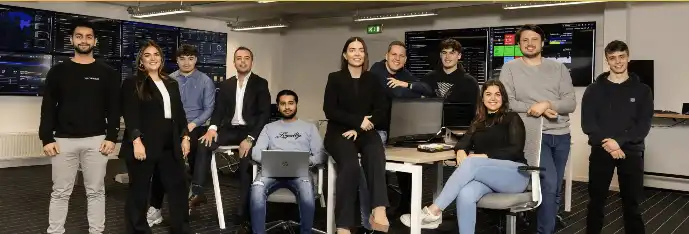
In three years, Cybercompany has scaled to a team of 15 professionals: five consultants who partner with clients to design application security and access strategies, and ten analysts delivering continuous network threat monitoring and system health oversight. The model is gaining traction — and the next strategic priority is talent development, with the launch of CyberCampus to train the next generation of specialists.
The question is not whether you will be breached. It is when.
Cybersecurity is an asymmetric contest. Attackers need to find a single vulnerability. Defenders must monitor the entire threat surface — both current and emerging. That asymmetry demands constant vigilance, deep technical understanding, and an operating model built for speed.
Operational convenience creates exposure.
Consider a seemingly harmless example: using generative AI to draft an employment contract — and including the employee's name and national ID number in the prompt. That data is now in a third-party system. The desire for frictionless operations will always create tension with security posture. The answer is not to stop innovating — it is to innovate with discipline.
Most organizations lack complete visibility into their own access landscape.
Shared credentials within offices. Remote access expanded during the pandemic. Third-party service providers with lingering permissions. When Cybercompany conducts access assessments, the finding is consistent: open doors — both literal and digital — that no one is monitoring.
The approach is methodical. Starting from the client's operational reality, Cybercompany restructures how the organization interacts with its IT environment. Access management is redesigned from the ground up. Detection and alerting systems are deployed to surface anomalies. External threat intelligence is applied through controlled penetration testing. And as a long-term cybersecurity partner, Cybercompany ensures the environment remains current, hardened, and resilient.
source; https://kennemerland.sterksteschakel.nl/genomineerden/cybercompany/
When Peter Beentjes managed enterprise email marketing campaigns as an external service provider, he confronted this challenge firsthand. Safeguarding client system access demanded more than good intentions — it required rigorous methodology. That pursuit of excellence in identity governance and threat differentiation became the foundation of Cybercompany.
In three years, Cybercompany has scaled to a team of 15 professionals: five consultants who partner with clients to design application security and access strategies, and ten analysts delivering continuous network threat monitoring and system health oversight. The model is gaining traction — and the next strategic priority is talent development, with the launch of CyberCampus to train the next generation of specialists.
The question is not whether you will be breached. It is when.
Cybersecurity is an asymmetric contest. Attackers need to find a single vulnerability. Defenders must monitor the entire threat surface — both current and emerging. That asymmetry demands constant vigilance, deep technical understanding, and an operating model built for speed.
Operational convenience creates exposure.
Consider a seemingly harmless example: using generative AI to draft an employment contract — and including the employee's name and national ID number in the prompt. That data is now in a third-party system. The desire for frictionless operations will always create tension with security posture. The answer is not to stop innovating — it is to innovate with discipline.
Most organizations lack complete visibility into their own access landscape.
Shared credentials within offices. Remote access expanded during the pandemic. Third-party service providers with lingering permissions. When Cybercompany conducts access assessments, the finding is consistent: open doors — both literal and digital — that no one is monitoring.
The approach is methodical. Starting from the client's operational reality, Cybercompany restructures how the organization interacts with its IT environment. Access management is redesigned from the ground up. Detection and alerting systems are deployed to surface anomalies. External threat intelligence is applied through controlled penetration testing. And as a long-term cybersecurity partner, Cybercompany ensures the environment remains current, hardened, and resilient.
source; https://kennemerland.sterksteschakel.nl/genomineerden/cybercompany/
Further Reading